Many Australians enjoy the benefits of the Private Health Insurance Rebate, which helps reduce the cost of their health insurance premiums. However, a common issue arises when people find themselves having to repay some or all of this rebate when they lodge their tax returns. This situation can be confusing and frustrating, but it is a result of how the rebate is means-tested against your income.
What is the Private Health Insurance Rebate?
The Private Health Insurance Rebate is a government initiative designed to make private health insurance more affordable. It is a percentage of your premium that the government pays, and the rate depends on your age and income. The rebate can be claimed in two ways:
As a reduction in your premium throughout the year. Most health funds default you to the highest rebate of 24.6%, as this minimises the monthly premium. (Rebate NOW – Pay back later)
As a refundable tax offset when you lodge your tax return. (Pay full premium now – Claim rebate at EOFY)
Many people opt to receive the rebate as a reduction in their monthly premium payments. However, if your income exceeds the threshold you anticipated at the start of the year, you will have to repay the excess rebate when you lodge your tax return. This repayment happens because the rebate you received was higher than what you were entitled to based on your final annual income.
So, should you get the REBATE monthly or Pay 100% of your premium monthly, then sort out the rebate at EOFY?
For example, if you expected to earn $90,000 (Income Tier 1) but ended up earning $100,000 (Income Tier 2), the rebate percentage you received during the year will be higher than what you were entitled to. The difference will need to be repaid.
Repayment of Rebate
This happens within your tax return calculation at the end of the year. Tax software looks at what rebate you did receive and compares this to what you should have paid. Your tax estimate clears this difference as a payable if you underpaid or a refund if you overpaid.
Managing the Rebate: Two Approaches
TAKE REBATE NOW – REPAY AT EOFY: Take the rebate each month and know that you may need to repay some or all of it at EOFY. This makes your monthly private health premiums cheaper, delaying any repayment of the rebate until you lodge your tax return. Often, this can put individuals into a tax payable position at EOFY, which can come as a surprise. We generally recommend this approach, as you hold any excess even though it may result in a tax bill at EOFY.
ASK YOUR HEALTH FUND TO REDUCE YOUR REBATE: Alternatively, you can choose to pay more each month without the rebate and claim the correct amount at the end of the financial year (EOFY). This approach ensures you don’t have to repay any excess rebate but means higher upfront costs throughout the year.
Practical Tips
Update Your Income Estimate: If you experience a change in income, update your estimate with your health insurer to adjust the rebate accordingly. This is hard work and not many do this.
Consider Tax Planning: Speak with us to estimate your exposure to the rebate and determine if there are any actions you can take to reduce or minimize the rebate payable. This can help you set aside the necessary funds if you anticipate a higher income.
Final Thoughts
Repaying the Private Health Insurance Rebate can be frustrating, but understanding how the means testing works can help you manage it more effectively. Whether you choose to receive the rebate throughout the year or claim it at the EOFY, staying informed and planning ahead will help you avoid unexpected repayments.
If you have any questions or need assistance with your private health insurance rebate, feel free to contact our office. We’re here to help you navigate this aspect of your financial planning
The Fringe Benefits Tax (FBT) year ends on March 31st, 2024. This guide will answer your essential FBT questions and help you stay compliant.
Do I Need to Register for FBT?
You likely need to register if you provide any employees (including directors) with:
Motor Vehicles
car parking
Entertainment (food and drinks)
Employee discounts or loans
Reimbursement for private expenses
Should I Lodge an FBT Return Even if I Don’t Owe Tax?
YES! We highly recommend lodging a return, even if you don’t owe FBT. This limits the ATO’s audit window to 3 years. Otherwise, they can audit any past year.
Key Actions by March 31st, 2024:
Gather odometer readings: Get your employees to photograph their car odometers and email them to you. This helps determine if the “operating cost” method reduces your FBT liability.
Manage private car use: Carefully monitor home-to-work commutes and personal use of business vehicles. The ATO is actively checking for unreported benefits.
Review meal entertainment: Prepare a record of meal entertainment expenses, including:
Total cost (including GST)
Number of employees and their names
Number of employee associates and their names (clients’ names not required)
Nature of the event (dinner, lunch, etc.)
What’s Exempt from FBT?
Items like:
Electric Vehicles – conditions apply – read our updated blog
Mobile phones
Laptops
Tablets
Tools of the trade
Minor and infrequent benefits (under $300)
Reducing Your FBT Liability:
Consider offering cash salary instead of some fringe benefits.
Provide benefits employees could claim as tax deductions if they paid for them – eg mobile phone or laptop
Allow Novated Leases – so that the FBT issue is dealt with on staff pay slips. Pre and post tax deductions.
Look for FBT-exempt benefits.
Use employee contributions (be aware of tax implications).
Get Free FBT Factsheets:
We offer several free factsheets on various FBT topics. Contact us to request them below.
Next Steps:
Don’t ignore this issue. ATO had been asleep on this issue for many years but now have the will and the data to pin down any businesses who are not correctly reporting their obligations.
We can help you meet your FBT obligations and reduce your tax liability. Contact us today with any questions!
Remember: This blog post is for informational purposes only and should not be considered tax advice. Always consult with a qualified tax professional for personalized guidance.
Starting a business in Australia has never been easier. While it can be a bit daunting, with a some help from an Accountant, it can also be incredibly rewarding. If you’re thinking about starting your own business, there some critical steps you need to cover off first.
Step 1: Do your research
Before you do anything else, it’s important to do your research and make sure that starting or buying a business is right for you. There are a lot of factors to consider, such as your skills, experience, and finances. You should also research the industry you’re interested in and the competition you’ll be facing.
We advise doing some research around your proposed business name, web address, social media tags etc to ensure you can run with the name that you desire.
Due Diligence – This is a specific process that you use when buying a business. We provide this service to clients to give them an independent analysis of the business that they are looking to buying. We fact check the information given by the selling party and give our opinion on the price that you should pay.
Cash Flow forecasts are a great way to test your ideas. What sales do you need to break even? What sales do you need to pay yourself a decent wage? Speak to us to develop a cash flow forecast for your idea.
Business plans also allow you to confirm the viability of your business case, and improve your ideas, on paper before risking your cash. Running your plan by some trusted advisors and experienced business people can also highly improve your likelihood of success.
You may do the work on your Business Plan and realise that it is not currently viable. This is great as you have only invested a bit of your time. You may stop here and revisit this or keep adjusting your plan.
If your plan is looking good, and you have reviewed it with your Accountant and trusted advisors, it is time to look at putting your plans into action.
Step 3: Meet with your Accountant
Book a meeting with us. We deal with small businesses every day and have a wealth of experience with businesses that have been through the full lifecycle your business will go through. We can fill any gaps in your knowledge and potentially save you costly mistakes.
We can quote up a package to assist you with setting up your business structure, Accounting software and an ongoing plan to ensure you meet all of your tax and accounting obligations.
Setting your business up correctly from the beginning ensures that you have the highest chance of success as you build up your business.
The next step is to choose a business structure. There are three main types of business structures in Australia. You need to consider the full life cycle of your business to choose what is right for you.
Cost, complexity of management and tax implications are all important considerations. Take some time to speak with us to get expert advice up front. This will save you any regrets in the future as you can make a fully informed decision.
Consideration must also be given to current and proposed ATO laws. Particularly those regarding Personal Services Income and Professional Profits. Speak to us about this.
The common choices for business structure are:
Sole trader: This is the simplest type of business structure. As a sole trader, the business is attached to you. You will be personally liable for the debts, liabilities and legal issues of your business.
Partnership: This is structure involving two or more people. Partners are jointly and severally liable for the debts, liabilities and legal issues of the business. This is rarely a good idea. Generally only used by spouses.
Company: These are the most common entity used by businesses. Companies are a separate legal entity from its owners. You would own shares in the company. You also need to select one or more people to be directors. Companies are limited liability entities, which means that the owners may not be personally liable for the debts and liabilities of the business – as long as the directors have not breached the corporations act. A company can sue and be sued. Companies can also retain profit and pay 25% company tax in most circumstances. Retained profit is paid out later via dividends.
Trusts – These are somewhat common for small business. You also need to form a Corporate Trustee (Company) to be trustee of the trust. Trusts must distribute ALL profits each year. There are certain advantages, and disadvantages to using a trust. The 2 main types of trust are:
Discretionary Trust – Directors of the trustee company have discretion as to how profit is distributed. This can be quite flexible.
Unit Trust – much like a company, owners buy units instead of shares. Distributions to unit holders is based on how many units are held as a % of the total units issued.
Step 5: Form your entity
Once you’ve chosen a business structure, you can work with your Accountant and legal advisor to form the entity. It is very important to get the paperwork correct at this step. We have seen and helped to correct many errors where people have tried to DIY this step.
If you choose a company, you will need to first get your MyGovID, then a Director ID, to be able to form a company.
Step 6: Get your Registrations
OK. Now you need to get comfortable with some acronyms. ACN, ABN, BAS, GST, PAYGW, ASIC, STP, ABR, not to mention the other things like ABRS, Director ID and MyGovID.
This is where you really need expert advice from your Wood Accounting to ensure you are setup correctly from day one.
Here is a quick run down of the most common small business acronyms everyone needs to become familiar with:
ABN (Australian Business Number) is a unique 11 digit identifier for your business. You need an ABN to operate a business in Australia.
GST (Good and Services Tax) is 10% added to most goods and services. You must register for GST if your turnover (income) will be more than $75,000 per year. GST is a user pays tax in that the end users end up paying the tax. So consumers that spend the most pay the most GST.
ACN (Australian Company Number) – a unique 9 digit number issued to all companies in Australia. Fun fact – your ABN is your ACN with 2 extra numbers added to the FRONT of the number.
ASIC (Australian Securities and Investment Commission) – The Australian regulator for companies. ASIC is responsible for promoting a fair, transparent and efficient financial system for all.
PAYGW (Pay as You Go Withholding) – This is a registration you must have in order to pay wages and with hold tax.
STP (Single Touch Payroll) – This is a new system that requires all businesses to submit each pay run to ATO in real time. Allowing ATO to have visibility on PAYGW and Super that is due for employees.
BAS (Business Activity Statement) – The is a monthly/quarterly/annual statement businesses lodge to report their GST, PAYGW, PAYG, FTC and other taxes payable for the period. Businesses use software such as Xero to capture this information and summarise it into the BAS.
Step 7: Finalise your Intellectual and Digital Property
Get your digital identity sorted ASAP. You will have checked all this out in your business plan but now you need to register:
Website domain names,
email systems,
social media tags – these are critically important digital assets
your logo and marketing collateral
Trademark – consider trademarking your logo, colours, tag lines etc. This will prevent others from using these to steal your business. Be aware that your business or company name DO NOT prevent others using them.
Step 8: Get your Systems Right
What systems are you going to use to run your business efficiently, so that you have a competitive advantage over your competition?
Each of your business functions will likely have a system. Most systems these days are digital cloud solutions.
Your Accounting system is the centre of any business. This provides the functions of payroll, quoting, invoicing, accounts payable, accounts receivable, bank reconciliations, reporting, BAS etc. Common solutions here are Xero and MYOB. Our preference is Xero due to it’s ease of use for the customer.
Secondary systems surround the core accounting system. These include, Job management systems, HR systems, POS systems, inventory systems, online store systems and many more.
Step 9: Open a business bank account
It’s important to have a separate bank account for your business. This will help you keep your personal and business finances separate. We always recommend a 2 account system.
1 main bank account – for every day trading
2 tax and super account – we have clients move their tax obligations to this account so that they have the $$ available when their tax obligations are due.
We do not recommend a certain bank but we do ask clients to use a bank that is able to connect bank feeds to Xero. Without this bookkeeping and BAS become a really painful experience.
Step 10: Get the right insurance
There are a number of different types of insurance that you may need for your business, such as business interruption insurance, public liability insurance, cyber insurance and workers’ compensation insurance. Worker’s Comp is compulsory for all businesses that have employees. That includes those who only employ the owners.
If you are unsure, speak to a business insurance broker for tailored advice.
Step 11: Get the necessary permits and licenses
Depending on the type of business you’re starting, you may need to obtain certain permits and licenses. For example, if you’re selling food, you’ll need a food handling permit. Tradies may need a new permit to add their new entity details to current licences.
Step 12: Market your business
Once you have your business up and running, you need to let people know about it. There are a number of different ways to market your business, such as online marketing, print advertising, and public relations.
Step 13: Have Fun!
Starting a business is a lot of work, but it can be very rewarding. By following these steps, you can increase your chances of success. Enjoy the process of building your own successful business.
Step 14: Think about your Exit Strategy
Building a business is like building a house. At some point in the future you may not fit with the business any more and need to move on. Again the 5 Ps come into play. Proper Planning Prevents Poor Performance. Think about and have a rough plan for some common scenarios:
Retirement
Sale after a planned time period
Illness or death – make sure you have personal wills and estate planning in place.
Shareholder/Unitholder agreements – if you are in business with other owners and directors get a legal agreement in place to clarify how changes in to ownership will play out.
As Accountants we can help plan these scenarios and refer you to lawyers who are experienced in drafting practical shareholder agreements. Book a chat to run through these steps.
Additional tips for starting a business in Australia
Network: Networking with other entrepreneurs can help you learn from their experiences and get advice and support.
Challenges: Starting a business is a challenging but rewarding experience. Speak to us at Wood Accounting for advice and support if you experience any challenges along the way.
It’s a New Financial Year, which means Tax Time is here again!
Our mission is to optimise your tax position based on the current taxation laws.
We aim to get it right the first time. To avoid ATO scrutiny, we don’t do dodgy deductions.
We don’t make the laws but we do help you stay within them. We ask you to be prepared with your deductions and income so we can make an accurate calculation of your tax position.
Below are key points to help you stay on the right side of the ATO.
6 Key Points to Consider for Tax 2023
WAIT – ATO is urging individuals to wait until late July to lodge 2023 tax to avoid mistakes and missed information. You must wait until your Income Statement is TAX READY – You can find your Income Statements via MyGov to check if they are Tax Ready.
DUE DATE – if you are up to date and received a refund in FY22, your due date will be 15 May 2024. So you have plenty of time.
WORK FROM HOME (WFH) DEDUCTION CHANGES: Now that COVID has passed ATO have changed the way you claim WFH.
ATO DATA MATCHING RAMPS UP: ATO are now using big data sets to check your returns. Their main focus is on:
RENTAL PROPERTY LOANS: ATO will have transaction level data on loans so they can check interest and if you are using the loan for private purposes. We will be requesting full loan statements for Tax 23 to pre-check this before we lodge
GIG ECONOMY – Airbnb, Uber, Airtasker, Fivrr, OnlyFans etc. ATO are getting intel on all of these types of income.
ASSET SALES – Capital Gains Tax – ATO continue to track this
REFUNDS SHRINK – ATO removed the Low and Middle Income Tax Offset (LMITO). This will mean your refund will be up to $1,500 smaller depending on your income level.
ATO FOCUS AREAS – ATO have announced 3 key focus areas for Tax 2023.
Rental Property Deductions
Work Related Expenses
Capital Gains Tax
1. WAIT TO LODGE
No need to rush to get tax 2023 done. We know people are keen to get their refund BUT rushing to lodge early often leads to mistakes being found by ATO later on.
ATO gather a massive amount of data such as: employment income, bank interest, private health details, share dividends, capital gains, managed fund income etc. This can take a month or more to flow through so the more complex your return, the longer you should wait.
Managed funds are usually the biggest hold up. You will need to wait until October before that information flows though.
2. DUE DATES
Lodging with a registered Tax Agent, like us, affords you a longer time frame to lodge your tax.
Lodgement Due Date
Description
31 October 2023
– Tax return for all individuals where one or more prior year tax returns were outstanding as at 30 June 2023. – Also those who self-lodge
31 March 2024
Tax return for individuals whose latest return resulted in a tax liability of $20,000 or more
15 May 2024
Tax returns for all remaining individuals and trusts not required earlier (Most People)
Individual Tax Lodgement Dates – ref ATO
3. WORK FROM HOME (WFH) DEDUCTION CHANGES
The fixed rate method for calculating your deduction for working from home expenses has been revised. This revised method is available from 1 July 2022.
The fixed rate method has been revised to:
increase the rate per work hour that you can claim when you work from home
change the expenses the rate covers
change the records you need to keep
remove the requirement to have a home office set aside for work.
If you don’t use the revised fixed rate method, you need to use the actual costs method to claim a deduction for the additional expenses you incur as a result of working from home.
have a record of the total number of hours you work from home and the expenses you incur while working at home
have records for expenses the fixed rate per work hour doesn’t cover and that show the work-related portion of those expenses.
How it works
You can claim 67c for each hour you work from home during the relevant income year. The rate includes the additional running expenses you incur for:
home and mobile internet or data expenses
mobile and home phone usage expenses
electricity and gas (energy expenses) for heating, cooling and lighting
stationery and computer consumables, such as printer ink and paper.
The rate per work hour (67c) includes the total deductible expenses for the above additional running expenses. If you’re using this method, you can’t claim an additional separate deduction for these expenses.
How to claim expenses the fixed rate doesn’t include
You can separately claim a deduction for the work-related use of technology and office furniture such as chairs, desks, computers, bookshelves. These are generally depreciating assets that decline in value over time. You can also claim the repairs and maintenance of these items.
If the item cost $300 or less and you use it mainly for a work-related purpose, you can claim an immediate deduction for the cost in the year you buy it. This may include items, such as keyboards, computer mouses, power boards, desk lamps and chargers.
forms part of a set that together cost more than $300.
You may choose to work out the decline in value of low-cost assets and low-value assets with a cost or opening adjustable value of less than $1,000 through a low-value pool. You calculate decline in value of depreciating assets in a low-value pool using a diminishing value rate.
Where you use your depreciating assets for both work and private purposes, you need to apportion your decline in value deduction. You can only claim the work-related portion as a deduction.
We can no longer use the COVID Shortcut Method. That finished as at 30 June 2022.
4. ATO DATA MATCHING – Big Brother is Watching
The Australian Taxation Office (ATO) has announced that it is expanding it’s data matching program. ATO has been using 3rd party data for many years for things like employment income and interest earnings.
ATO are now expanding their data matching into the following areas:
rental property deductions
sharing economy income
cryptocurrency transactions
Income protection insurance premiums
ATO assistant commissioner Tim Loh said the expanded capabilities will leave the Tax Office clear on which individuals are being genuine and which are trying to get away with providing fallacious data.
“This isn’t a game of Guess Who, as our sophisticated data matching programs provide us with all the clues we need to track down taxpayers with incorrect information in their tax return,” said Mr Loh.
“We will use this information to identify and educate taxpayers who have made incorrect claims in their return, with a longer-term plan to pre-fill as much information as possible in future years.”
The ATO said while nine in 10 rental property owners were getting their returns wrong, the additional data matching capability of investment loan data and landlord insurance policy information should see a marked improvement.
ATO will get transaction level investment loan statement data. This will allow them to not only add up the interest deduction but also see any personal loan redraws that would reduce the deductibility of any interest. You can’t redraw to buy a car and keep claiming 100% of the interest.
ATO Assistant Commissioner Tim Loh said the ATO is continuing to prioritise areas where we often see mistakes being made.
5. EXPECT YOUR REFUND TO REDUCE
The Federal Government and ATO have removed a tax offset that previously boosted tax refunds. The Low and Middle Income Tax Offset (LMITO) has been discontinued so your refund could be up to $1500 worse off if your tax situation is exactly the same as the previous year. You may even end up with a tax bill.
Your tax return outcome may change for any of the following reasons:
A tax offset you received previously is no longer available or you are no longer eligible for an offset – for example, the low and middle income tax offset ended on 30 June 2022.
Your income or deductions for the income year are different from previous income years.
We find a difference between the details in your tax return and the information we receive through pre-fill data or our data matching program.
You have not advised your employer of your study or training support loan and your income is above the minimum repayment threshold and you have a compulsory repayment amount.
Some debts will not be applied to your tax return until after it is lodged. This means your tax estimate in may not match your final tax outcome. We do endeavour to check this before we lodge.
If you believe you will get a tax bill, it’s still important to lodge your tax return on time even if you can’t pay immediately. You can negotiate a payment plan with ATO to repay unexpected tax debts over a year or two.
The ATO have announced 3 key focus areas for tax time 2023:
Rental Property Deductions
Work Related Expenses: Avoid the “Copy & Paste”
Capital Gains Tax
Rental Property Deductions
The ATO’s review of income tax returns show 9 in 10 rental property owners are getting their return wrong, and often sees rental income being left out, or mistakes being made with property related deductions – like overclaiming expenses or claiming for improvements to private properties.
The ATO is particularly focused on interest expenses and ensuring rental property owners understand how to correctly apportion loan interest expenses where part of the loan was used for private purposes (or the loan was re-financed with some private purpose).
‘You can only claim interest on a loan used to purchase a rental property to earn rental income – don’t forget, if your loan also includes a private expense, such as for a new car or a trip to Bali, you can only claim an interest deduction for the portion relating to producing your rental income,’ Mr Loh said.
The ATO has sophisticated data matching capabilities which include rental property-related data and has recently implemented a new residential investment property loans data matching program.
‘This is just one example of the work we are doing to help you get your return right and make sure people are claiming expenses correctly,’ Mr Loh said.
Work Related Expenses: Avoid the “Copy & Paste”
ATO are cracking down on those who take a “same as last year” approach. Some things will be similar or the same but you need to still cover the 3 basic rules of tax deductions:
You must have spent the money, and not been reimbursed
The item must be related to you earning your income
You must have records to prove the expense was incurred (a receipt or invoice)
Tim Loh, from ATO said ‘We continue to see shifts in the way Aussies are working, and it’s important to consider whether your claims reflect your working arrangements this year.’
‘There have also been some changes in how you calculate things like working from home deductions, so don’t be tempted to just copy and paste your prior year’s claims. We know a lot of people are working back in the office more compared to last year,’ Mr Loh said.
This year, the ATO is particularly focused on ensuring taxpayers understand the changes to the working from home methods and are able to back up their claims.
Capital Gain Tax: Have you considered ALL assets?
Capital gains tax (CGT) comes about when you dispose of a capital asset such as shares, property or cryptocurrency. To meet your tax obligations you need to declare your capital gain or loss in your tax return.
Generally your main residence is CGT exempt, unless you have used it to produce income, such as renting part or all of the house out on Airbnb, Stayz or privately. Accurate records must be kept to apportion the exempt time vs the income producing time.
Want to discuss your tax return needs with our team? Hit BOOK NOW above.
In today’s fast-paced digital era, small businesses need to stay competitive by embracing technology. The Federal Government has finally approved legislation to enact the Small Business Technology Investment Boost, provided by the Australian Taxation Office (ATO).
In this blog post, we’ll explore how this program can benefit your small business and how to leverage it to maximize deductions.
Understanding the Small Business Technology Investment Boost:
The Small Business Technology Investment Boost is an Australian government program aimed at encouraging small businesses to invest in technology. It offers an extra 20% tax deduction for eligible assets purchased and installed within the specified timeframe. By leveraging this boost, small businesses can enhance their operations, improve productivity, and gain a competitive edge.
Eligibility Criteria:
To qualify for the Small Business Technology Investment Boost, your business must meet the following criteria:
SMALL BUSIENSS – your business must have an aggregated annual turnover of less than $50 million
EXPENSE – Must already be a deductible expense for your business under taxation law
ELIGIBLE EXPENSE – Must be for business items
digital enabling items – computer and telecommunications hardware and equipment, software, internet costs, systems and services that form and facilitate the use of computer networks
digital media and marketing – audio and visual content that can be created, accessed, stored or viewed on digital devices, including web page design, video, podcasts etc.
e-commerce – goods or services supporting digitally ordered or platform-enabled online transactions, portable payment devices, digital inventory management, subscriptions to cloud-based services, and advice on digital operations or digitising operations, such as advice about digital tools to support business continuity and growth
TIMING – Eligible expenses must be incurred between 7:30 pm AEDT 29 March 2022 and 30 June 2023.
Backdated:
You will note that this law is retrospective, covering expenses from 7:30 pm AEDT 29 March 2022 to 30 June 2023 despite only being legislated on 22 June 2023.
This means you will need to trawl back through past spending to capture eligible expenses
Qualifying Assets:
The program covers a wide range of technology assets that can help improve your business processes. Some examples of eligible assets include computer hardware, software, printers, scanners, and digital tools. It’s essential to ensure that the assets you plan to invest in align with the ATO’s guidelines to claim the tax deductions successfully.
Claiming Deductions:
To claim deductions under the Small Business Technology Investment Boost, you must adhere to the ATO’s instructions and guidelines. It is important to keep proper records of your technology investments, including invoices, receipts, and any relevant documentation. Your tax advisor can provide detailed guidance on how to correctly claim these deductions and maximize your tax benefits.
IMPORTANT NOTE: All eligible spends are claimed in the 2023 business tax return despite teh time frame stretching back 3 months into the 2022 income tax year (29 Mar 22 – 30 June 22).
Example of the Small Business Technology Investment Boost:
Let’s consider an example to illustrate how the Small Business Technology Investment Boost can benefit your business.
Suppose you own a small graphic design agency with an aggregated annual turnover of $30 million. You are a small business ✅
In November 2022, to keep up with the latest design software and hardware, you invested $20,000 in new computers, graphic tablets, and design software licenses.
These items are normal deductions to your business ✅
This is also within the time frame for eligibility ✅
These are eligible digital enabling items ✅
This spend would normally be a 100% tax deduction assuming no private usage of these items.
By taking advantage of the Small Business Technology Investment Boost, you can claim an EXTRA 20% tax deduction in your business tax return. $20,000 x 20% = $4000.
This deduction can significantly reduce your taxable income, resulting in lower tax obligations and more funds available for further business growth.
Assuming you operate a company structure you would save $4000 x 25% company tax rate = $1000.00
Conclusion:
The Small Business Technology Investment Boost offered by the Australian Taxation Office presents a valuable opportunity for small businesses to invest in technology and improve their operations. By understanding the eligibility criteria, investing in qualifying assets, and correctly claiming deductions, small businesses can leverage this program to maximize their tax benefits. Be sure to consult with a tax advisor to ensure compliance with all the necessary requirements. Embrace the power of technology and propel your small business towards success in today’s competitive landscape.
The Australian Taxation Office (ATO) recognizes the importance of continuous learning and has introduced the Small Business Skills and Training Boost program
The Division 293 tax in Australia is a tax rule that targets higher-income earners by applying an additional tax rate on their superannuation contributions. It aims to make the tax treatment of superannuation fairer and ensure that high-income individuals receive the same concessional tax treatment as lower-income earners.
Who Does It Apply To?
The Division 293 tax is applicable to individuals whose combined income (including taxable income and concessional superannuation contributions) exceeds a certain threshold.
For the 2022-2023 financial year, the threshold is set at $250,000.
To calculate the Division 293 tax, you need to determine the excess amount above the threshold and apply a 15% tax rate to that excess.
ATO assess you for Division 293 once you have lodged your Individual Tax Return AND your superfund(s) have lodged their returns confirming your contributions.
How to Pay?
Division 293 Assessments are issued to you as an individual. As Div293 imposes an extra 15% tax on some or all of your super contributions for a given year.
There are 2 ways to pay:
– from your own money; or
– by releasing money from your super
We recommend releasing money from super as the funds being taxed are sitting in super.
EXAMPLE
Let’s take the example of someone earning $240,000 with $19,000 in super contributions in the same year.
Step 1: Calculate the combined income
Combined income = Taxable income + Concessional superannuation contributions In this example, the taxable income is $240,000 and the concessional superannuation contributions are $19,000.
Combined income = $240,000 + $19,000 = $259,000
Step 2: Determine the excess amount above the threshold
Excess amount = Combined income – Threshold In this example, the threshold is $250,000.
So, in this scenario, an individual earning $240,000 with $19,000 in super contributions would be liable for a Division 293 tax of $1,350.
Division 293 assessments are issued to the individual in a similar way to a regular Notice of Assessment. The assessment will come via myGov or via mail. You need to deal with this straight away.
We recommend following the instructions to have money released from super to pay the assessment before the due date.
DISCLAIMER: It’s important to note that this is a simplified example and actual tax calculations may involve other factors and deductions. It’s advisable to consult with a qualified tax professional or the Australian Taxation Office (ATO) for accurate and personalized tax advice.
If you’re an individual or sole trader, you can manage your tax and super online.
To do this, you will need a myGov account linked to the ATO. To get started, you should have the following.
A myGov account using SMS,
myGovID or
the myGov code generator app as your sign in option,
your tax file number TFN.
And two of the following.
A notice of assessment received in the last five years.
A PAYG Payment Summary received in the last two years.
A super account statement from the last five years.
A dividends statement from the last two years.
A Centrelink payment summary from the last two years.
Or your bank account details. This must be an account you had your income tax return refund paid into last year or has earned interest in the last two years.
If you don’t have this information available, you will need to phone the ATO and get a unique linking code to complete this process.
Once you have this information ready, visit my.gov.au and sign in to your account.
When signed in, go to the linked services section and select view and link services. In the link a service section, select the link button to the right of Australian Taxation Office.
When you link the ATO, myGov will store your name and date of birth in your profile. If you already have a profile, these details must match, read and agree to the ATO terms and conditions. Provide your details, including your tax file, number, name, date of birth and address.
If your details have changed since you last dealt with the ATO, you will need to phone to update them before you can complete the link. Enter information carefully and accurately so that it will match your details held by the ATO.
You will also need to answer two questions from information contained in documents mentioned earlier. If you receive an error message at any time, take note of the error code and follow the link or instructions for more information. Once you’ve finished answering these questions, you’re done.
You have successfully linked your myGov account to your ATO record and that’s it. You can now manage your tax and super affairs through ATO online.
Having your full name correct with Governement agencies has never been more important.
In light of recent data breaches at large companies, like Optus and Medibank Private, ATO have increased their security around ANY changes to cleint names.
Tax Agents can no longer assist in the name change process – this is to ensure the actual person is changing their own name. Cases have surfaced of Tax Agents being instructed to change names by other family members or business associates without the actual person being aware. Driven by identity theft of fraud.
How Do You Change Your Name With ATO then?
You will need to gather some basic infortmation to allow the change to happen:
Your full name
Your Date of Birth
Your current home address
Your Tax File Number (TFN)
Your last tax refund or payable amount – should you not have that they will ask other questions realting to your tax return. Your employment income etc.
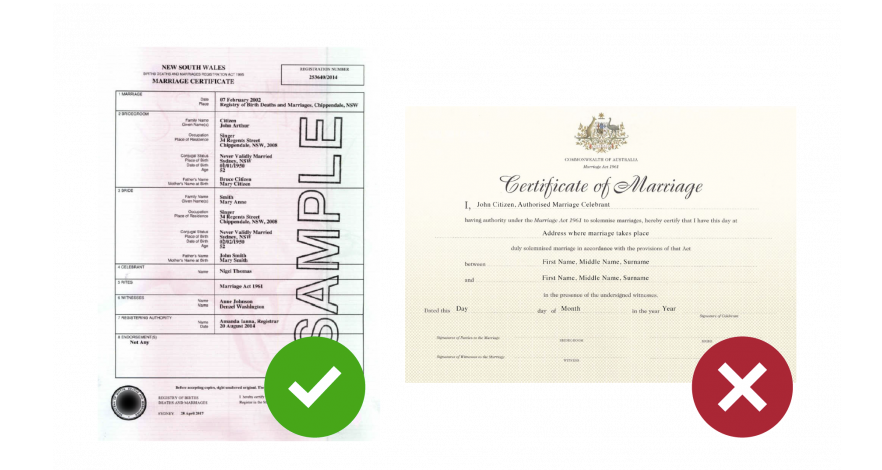
Your MARRIAGE CERTIFICATE, CHANGE OF NAME CERTIFICATE or DIVORCE ORDER as evidence. This must be the actual marriage certificate. Not the ceremonial one. See below.
Have your most recent Notice of Assessment from ATO handy.
ATO will need the Registration Number from the top right corner of your marriage certificate
If ATO already have your mobile number on file they can send you a 6 digit code as a 2 factor authentication
Other Name Change Reasons
You may have other issues with your name at ATO such as:
Missing middle name
Mispelt name
Short name vs full name – eg Ben vs Benjamin
Australianised name vs your birth name. Frank with ATO but Fotios on birth certificate.
Changing your name by choice
Why Does All This Matter?
As ATO and other Government agencies digitise and consolidate their databases they have multiple instances of each person across their different systems. Some of these have incorrect data such as names. MyGov and MyGovID are being used to centralise the identity of the human interacting with Gov to give both you and the Gov certainty that only you can access and change your own data.
Changing your name is hard because it should be hard. Having tight portocols around name changes makes it hard for fraud and identity theft to happen in the first place. This is a good thing.
Protect your private information as the experience of having your identity compromised or stolen is very traumatic and time consuming to correct. In some cases it can’t be entirely corrected.
Do you need extra funding to take the next step in your business strategy? We’ll help you review lenders and finance products – so you can find the best finance option for your business. #businessadvice
Every business needs finance to get the initial enterprise off the ground. You may well have entered into finance arrangements to fund the initial stages of the business, taking out loans to purchase equipment, lease premises or take on staff.
When was the last time you reviewed your finance or looked at the options for accessing other routes to funding? Are your finance facilities still offering the best interest rates and repayment terms, or are there better deals out there?
Other finance options may be available to help you fund your continuing growth, so taking a look at the current finance market is well worth thinking about.
Refinance your existing loans
It’s possible that you already have business loans in place. Sourcing that initial capital is such an important part of the startup process, and a vital stepping stone in getting your business idea operational. When was the last time you reviewed these finance arrangements? Could you, in fact, be getting a better deal?
The finance market is always evolving. New challengers will enter the market, new specialist finance products will be introduced and interest rates and repayment schedules will fluctuate and change. You may well have got a great deal on the business loans you took out five years ago – but refinancing these existing loans is likely to have multiple benefits.
You could:
Consolidate your existing loans into one finance facility
Lower the interest rate you’re currently paying on the loan
Pay off your loan more quickly, to reduce the debt in the business
Improve your cashflow position by cutting your repayment expenses
The key point here is that your business finance shouldn’t sit still. A loan is not a static debt. You can revisit and refinance your debt so it works in the best interest of the business.
Look for alternative routes to finance
Traditionally, businesses went to their bank manager when additional funds were needed. But the dynamic in the funding market has changed dramatically in recent years. Due to economic pressures, and the impact of the pandemic, the big banks have scaled back their lending to small businesses. Your high street bank is no longer the first port of call when finance is needed.
On the flipside of this, there are a growing number of alternative lenders, smaller challenger banks and specialist finance providers to choose from. And this has created a wide choice of different finance products to fit the needs of your growth plan.
If you need new equipment, asset finance is available.
When you have a short-term cashflow crisis, invoice finance is a good option.
If larger premises are needed, there are commercial mortgages to consider or bridging loans to make the initial purchase while you source the full capital that’s needed..
Explore the tax deductions that are open to your business
Another element of government-back financial support is the use of tax relief. One of your major expenses as a business will be paying your tax. There are usually various tax deductions available to help you reduce your tax bill and reinvest that saved money back into your business. Careful use of these tax breaks can make a big difference to your finances.
For example, Australia has research and development (R&D) tax relief scheme. To encourage businesses to innovate and invest in R&D, the government will offer a relief against the company’s expenditure on operational R&D costs. This may result in getting an R&D Tax Offset for your company. May rules apply to this so check with us or have a look at https://www.ato.gov.au/Business/Research-and-development-tax-incentive/
Another example is the Temporary Full Expensing of assets purcashed for business purposes. Temporary full expensing supports businesses and encourages investment, as eligible businesses can claim an immediate deduction for the business portion of the cost of an asset in the year it is first used or installed ready for use for a taxable purpose. More info on ATO website here
Choosing the right funding and finance will be vital to your long-term success as a business – so work closely with your advisers and think carefully about your choices.
We can recommend trusted finance brokers to assist with this process.